I am generally motivated to make my work from sharp impulses that search for an aesthetic outcome representative of a personal ideal. I am heavily invested in identity expression and creating pictorial work of this through portraiture and surrealist ideas. I feel strongest and most confident when in an artistic context. I am driven by a desire to communicate my processes and finished work to an audience of anybody who will listen. It is incredibly important for me to produce work as I feel that it pulls taut the slack of unresolved modern living. I aspire to pave my path in this way in hopes that it continues to enrich my life.
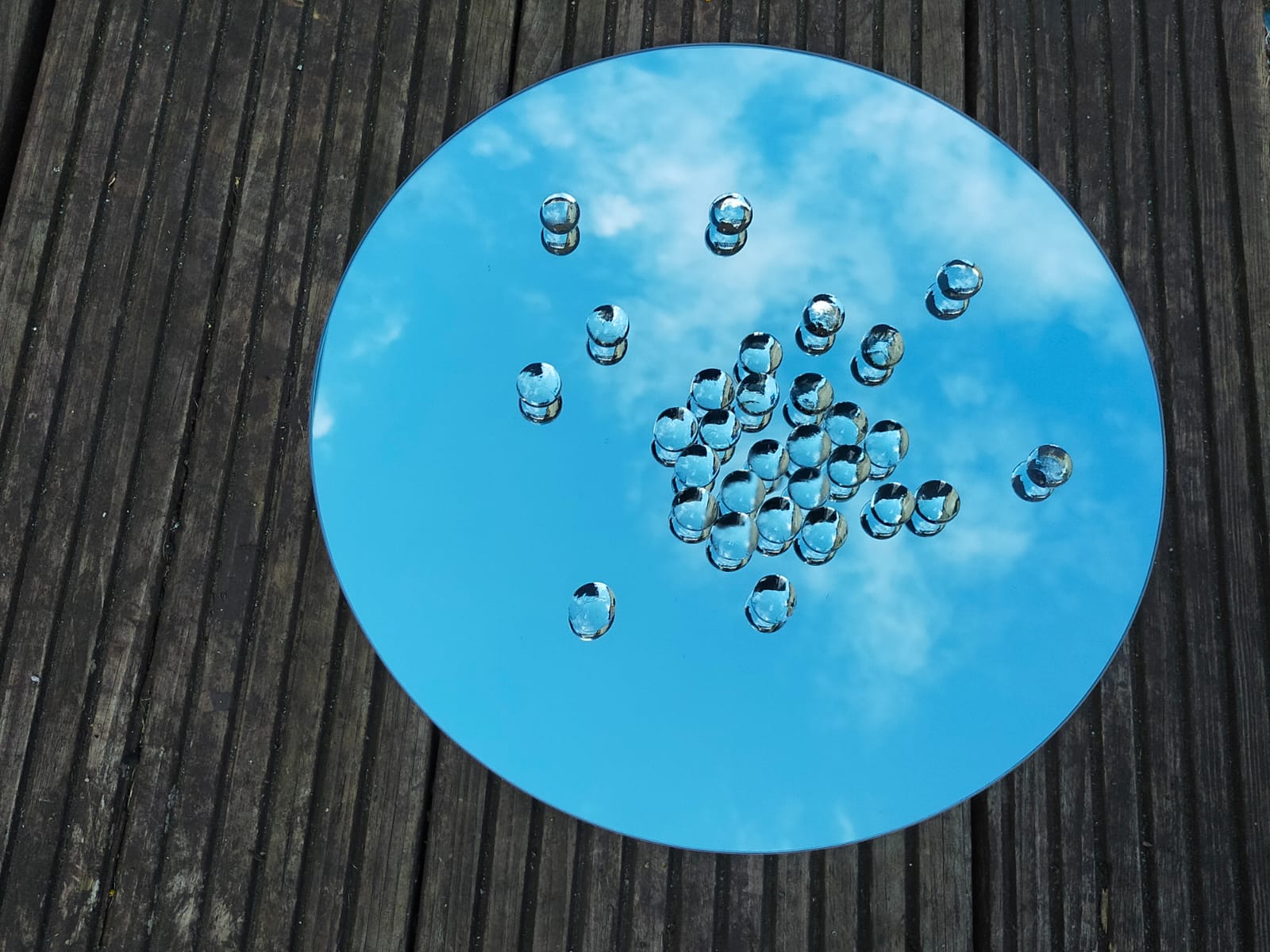
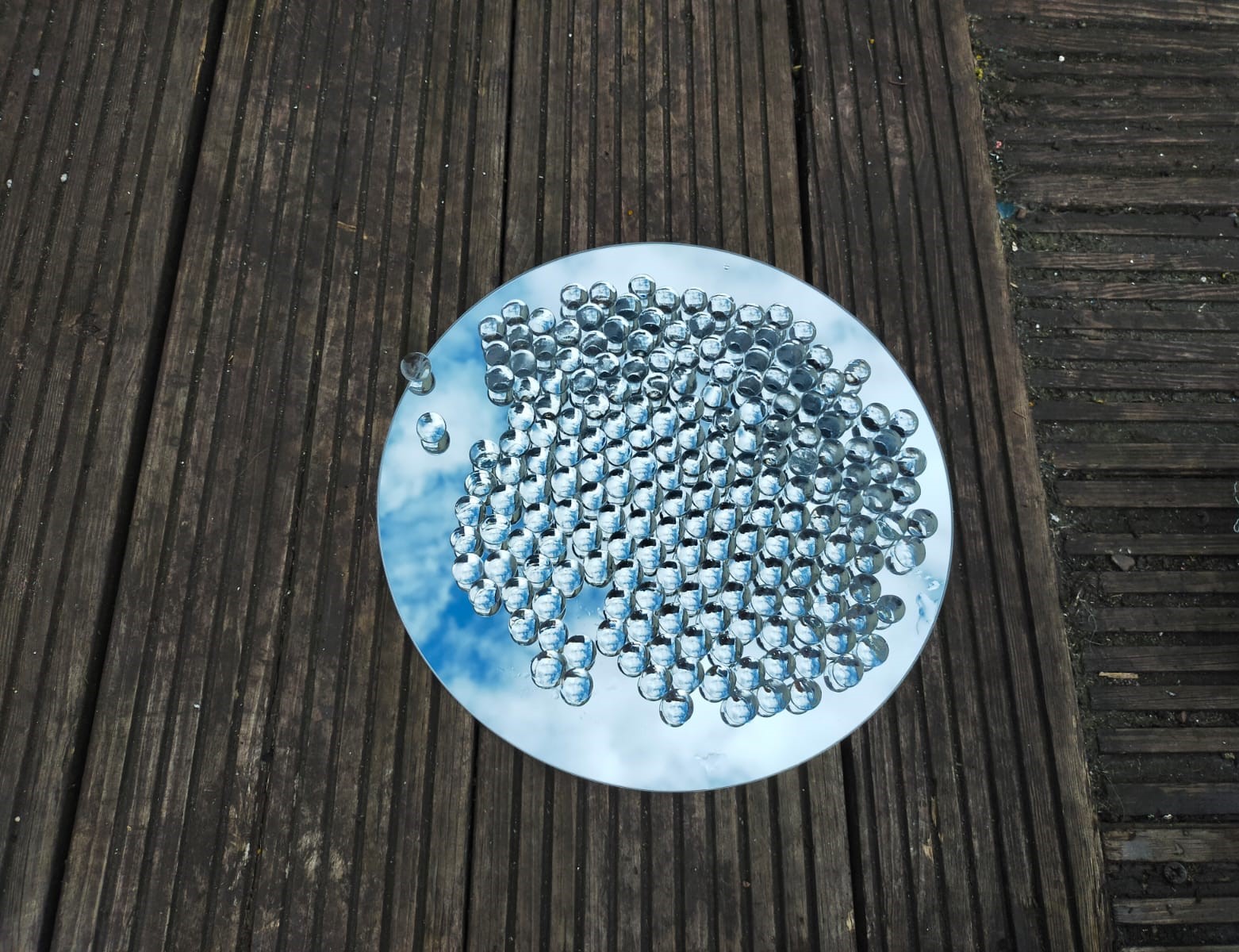
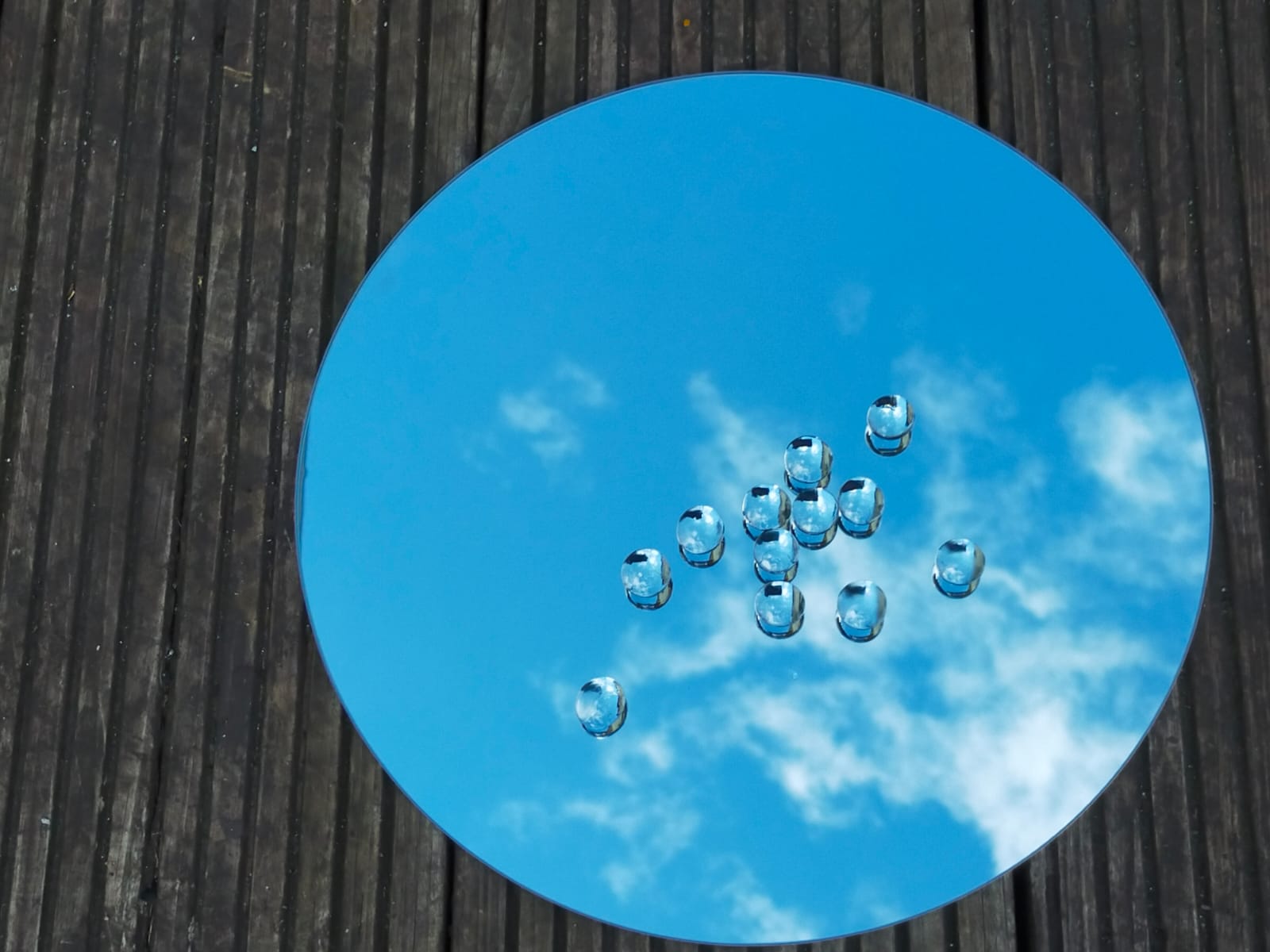
I took a laid back approach to my work, running with and developing on an initial interest taken from a long love affair with fluidity and specifically, studies on bodies of water. Experimenting with self-portraiture led me to wonder whether or not there had to be an image of legitimacy shown back from a reflection. If a reflection is only capable of presenting to us what is proposed to it, does that mean that everything seen in it is real? The mirrors image in my work depicts the vivid sky above which is often affiliated with the absence of limitation. There is an insinuation here to a direct link, the suggestion that you are looking through a hole into another dimension. It becomes obvious with focus and the increased addition of sphered water beads building up directly on the surface, however, that it is in fact, just that, a flat surface; a mirror.
I had become obsessed with circles and their complete perfection, they represented both a beginning and an end, a consistent loop that promised a safe return, a fluidity. The water beads used in my work expanded from a minuscule scale over time from being submerged in a container of water. This solidified an idea that incorporated the tangibility of both circular interest and fluid preservation. Wassily Kandinsky shared a specific love for the circle which he believed to have had a spiritual quality. The artist had a rare ability to experience the world around him unlike the majority, he was able to see colours when he heard music and hear music when he painted due to a condition called synaesthesia. Kandinsky often featured circles in his work, using them to draw focus and represent the volume and radius of the audible environment surrounding him. I think it is interesting that we are placed in an infinite supply of time, yet we can only experience a limited duration of It.

 BA (Hons) Fine Art - Canterbury
  Chloe Vince | Fine Art