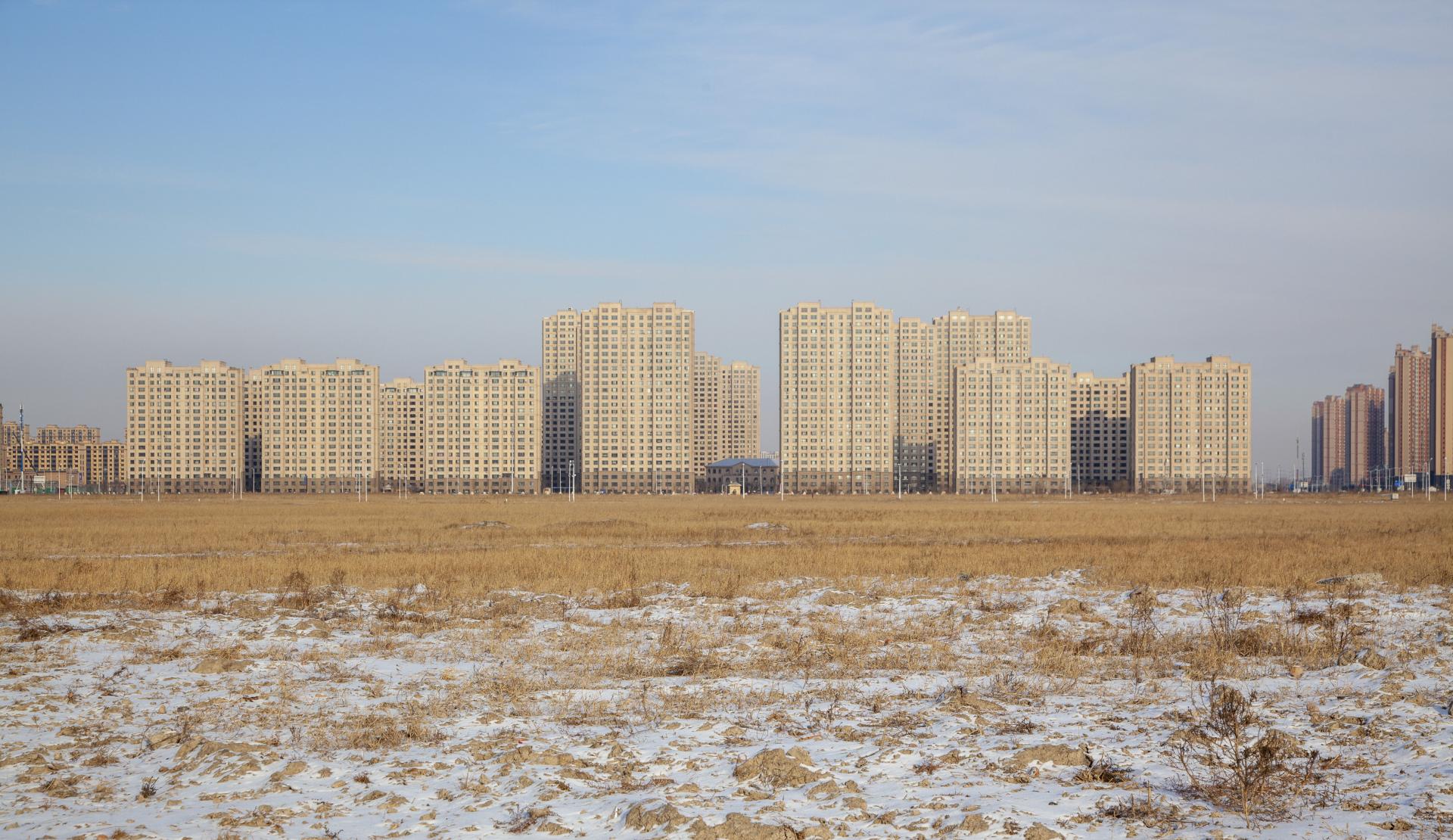
This exhibition explores a small city in northern China named Harbin, which is gradually becoming empty. Walk into the city’s industrial area and the surrounding areas of the city and you will find an interesting and helpless phenomenon. Decorated with abandoned billboards, empty industrial buildings, and barren oil wells, Harbin is no longer the place it once was. Many areas within this city are sparsely populated and quiet. Resources are relatively scarce, and development is slow. Local young people are forced to leave Harbin for more promising cities that will secure them a stable future. A large part of the province’s economy was once dependent on the heavy industry including mining, steel and heavy machinery manufacturing. In the past 20 years, with the decline of these industries, the economy has transformed. In the process of China’s modernization, many rural people have left their homes. Moving from rural to an urban area in search of a more vibrant community.
Hao re-examined his hometown. His work investigates his own longing for what this place once was. Hao found that the meaning of hometown only remains at the spiritual level, not the material level. Through the process of creating this work, Hao gained a deeper understanding of the hidden parts of his hometown and attempts to capture the changes that have occurred over time. By exploring memory Hao has found some resonance in the city. As a native of his hometown, he is motivated to find joyful memories and of reunion. He does this through photographing living environments, transportation, and folk customs including some ceremonies that only exist at core festivals. In the past, people would return from all over the country to gather and share stories. However, in recent years this has become exceedingly rare. In his grandfather’s time, houses were small and neighbours would meet passing through the city. Now the city is covered with large buildings and transportation has become so convenient that these random meetups no longer take place. Fewer people are returning for the New Year as they once did. The city is full of experiences and memories, and the photographer returns to the park where he used to go when he was a child. He aims to convey the emotions of abandonment and to show how lonely and ordinary the place has become.
Hao photographed scenes within the cities walls and observed the environment of his hometown including abandoned parks and factories. Through his journey, Hao realized that his hometown has become something entirely different. A lonely, abandoned space. He has also found that he intuitively began reflecting on the operation mode and law of the city allowing him to pay attention to the new truth of the city. Hao knows that his hometown will always exist in his heart.


 MFA Photography
  Jiahui Ye | Photography