My approach within Architecture has often been focused on the issues of context. I have found that attempting to holistically understand a place, people or a community becomes pivotal to any project before approaching the design work. I believe that understanding the context of a space; social and spatial issues become more easily identifiable. The clarity of existing conditions provides a clear and accountable view for spatial performance and programme proposal. Adding a sense of sympathy and depth of justification to the overall design project. As sustainable and successful design needs to invite scope for future changes yet still be able to consider the contemporary. With appropriate consideration for placemaking, we require accountability for the existing community. Which is why within this project we are faced with an issue of communal longevity for an area in East London.
This project looked to address the issues of community transience within placemaking and rebranding. As East London is still undergoing large scale redevelopment as part of the legacy rebranding scheme from the 2012 Olympics. Although this has encouraged a great deal of investment into the local economy. It has also begun to force out the very people who defined this area’s past and current identity as a creative and artistic hub.
Due to the change in land use and building typology. Heritage, function, and taxonomy have either been replaced or ignored. Hackney Wick and Fish Island are no longer able to perform in the same manner as they have before and with the increase in land values; the current community are less able to sustain themselves within this area. Therefore, the ability to retain local social history and individual expertise is being threatened, and with the rapid dispersal and replacement of this community, the experience and identity of Fish Island is becoming unrecognisable.
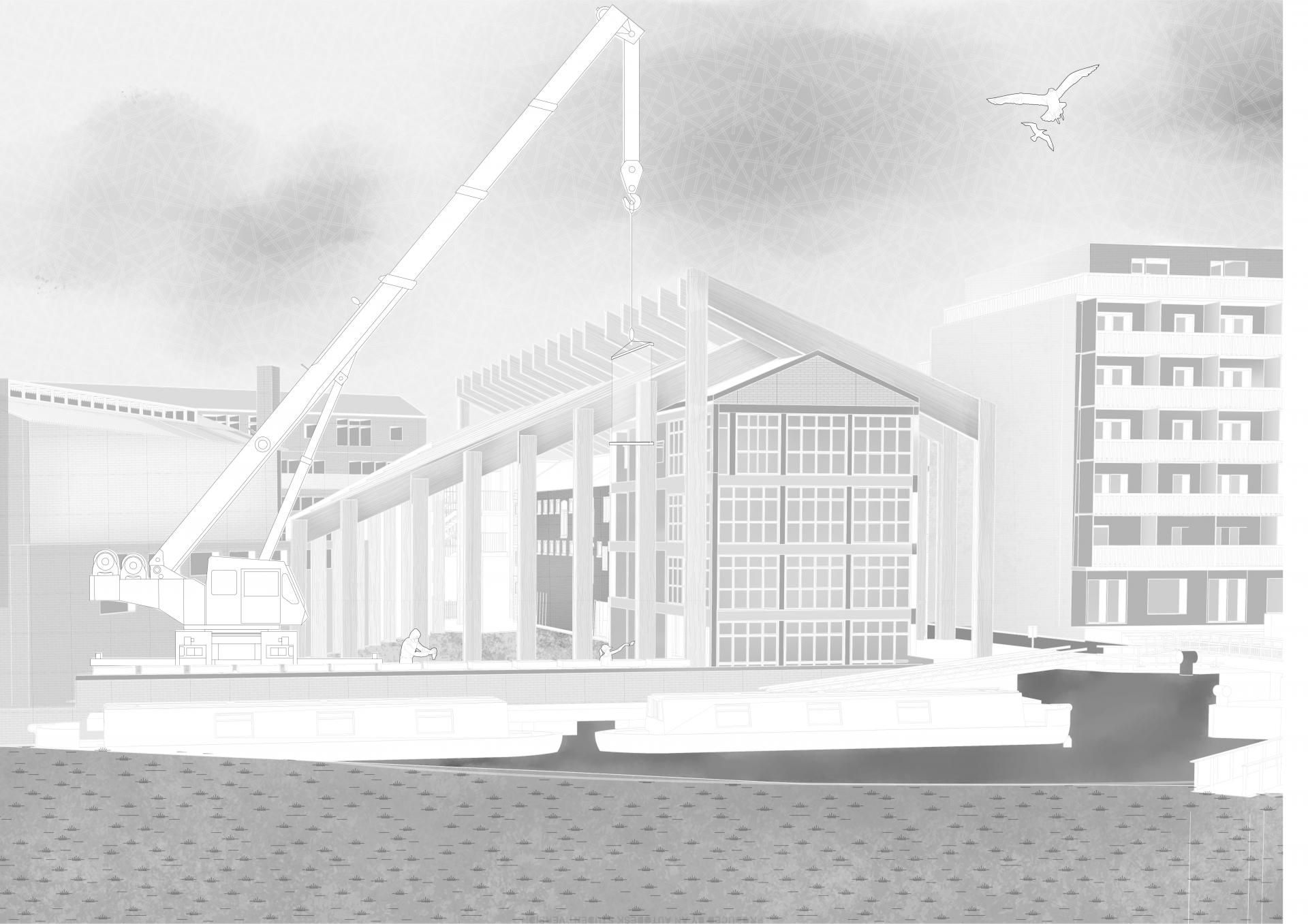
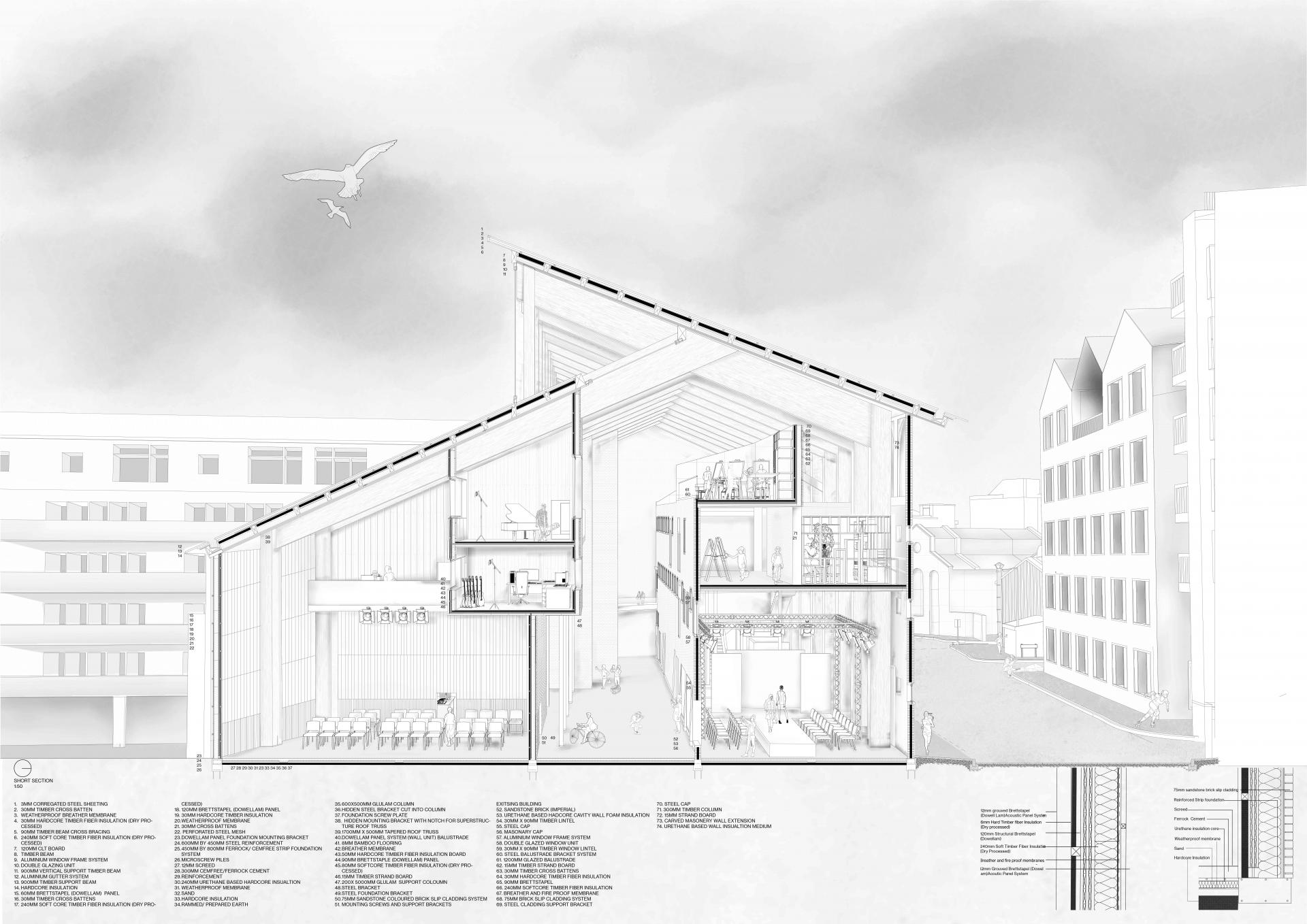
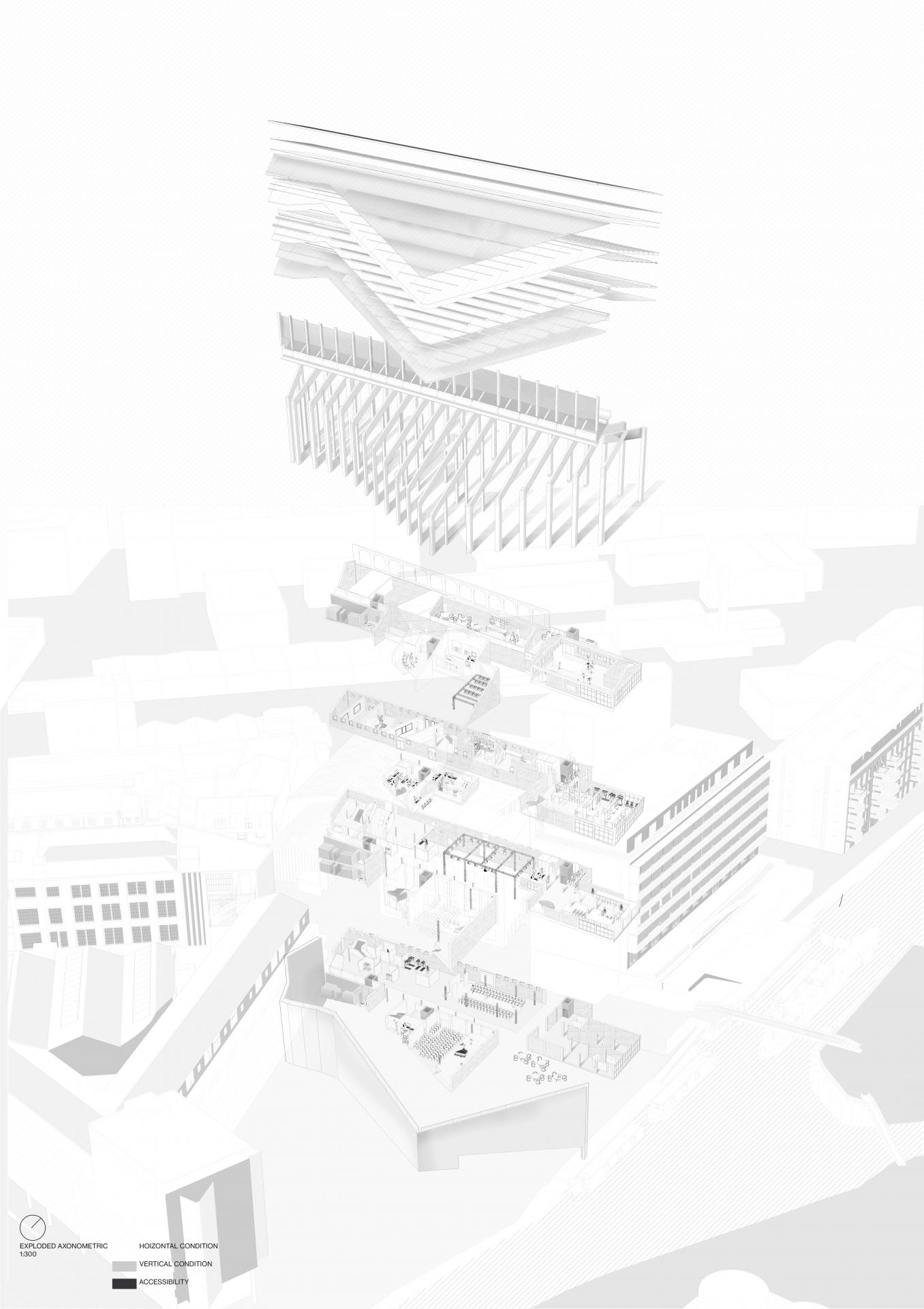
Trying to find a means to retain the local community long enough to share their experience and expertise became the main diver for this project. As I am looking at sustainable placemaking. I found that through education, knowledge is shared and through controlled interactions within a professional and passive context, integration within the community feels more natural, and by informing the spatial programming with education and networking in mind. Students can achieve greater success and enterprise within their careers after graduation. Therefore, working to retain the existing community and ensure a more sustainable long-term cycle for community replacement.
 Architecture