The theme is sustainable housing. There are two pieces of work for the Final Major Project: a digital and a physical outcome. What I am trying to portray in this project is that if one truly cares about sustainability, then the first thing would be trying to reuse an old structure or building that is abandoned. Demolishing a building causes dust and particles to be released and long term exposure will result in serious health conditions. If one wants to create a new structure, he/she should at least try to find an area where the building is non-invasive to its surrounding environment. Frank Lloyd Wright created “Fallingwater” to harmonise the relationship between his structure and the surrounding environment. Dorte Mandrup, an architect from Denmark, took an old Prussian Navy Bunker and converted it into an office building; yes the office building is not an example of sustainable architecture, but the idea of reusing an old bunker as the base for a new building is a great concept. The building is called “Trilateral Wadden Sea World Heritage Partnership Center”
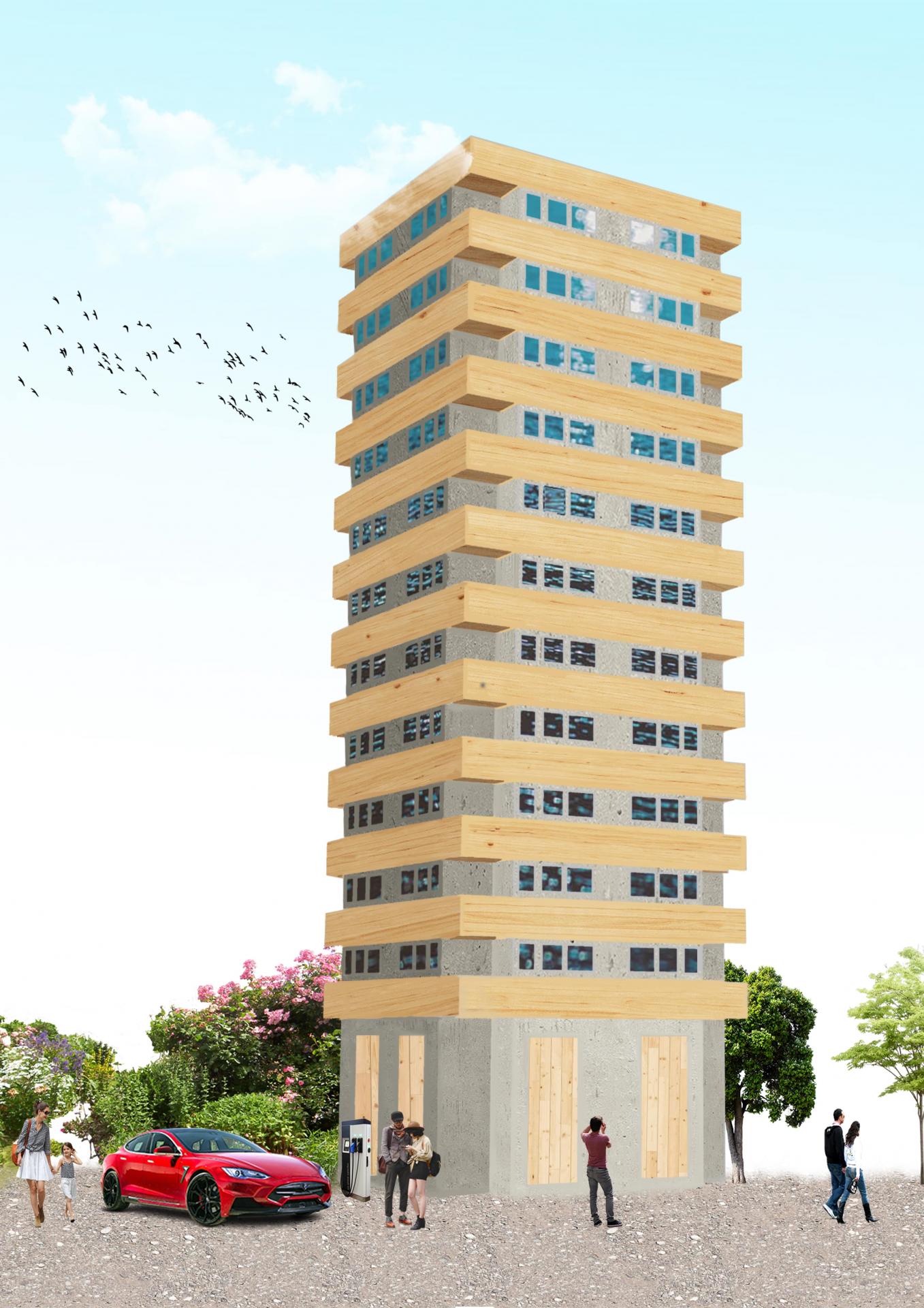
The digital outcome is a digital rendering of an existing council estate, but I re-designed the building to create a sustainable aesthetic and the rendering is done in Photoshop. If the retrofit was done in real life, the building would be built of sustainable materials such as reclaimed wood. VOC (Volatile Organic Compound) paint is harmful as it can irritate the eyes, nose, and throat. Parts of the building are painted with low to no VOC paint. Renewable energy and water heating are provided by evacuated tubes. The concept of retrofitting an existing building is inspired by the Thamesmead Estate which was retrofitted by Fraser Brown Mackenna Architects.
https://www.architectsjournal.co.uk/archive/fraser-brown-mackenna-unwraps-thamesmead-retrofit
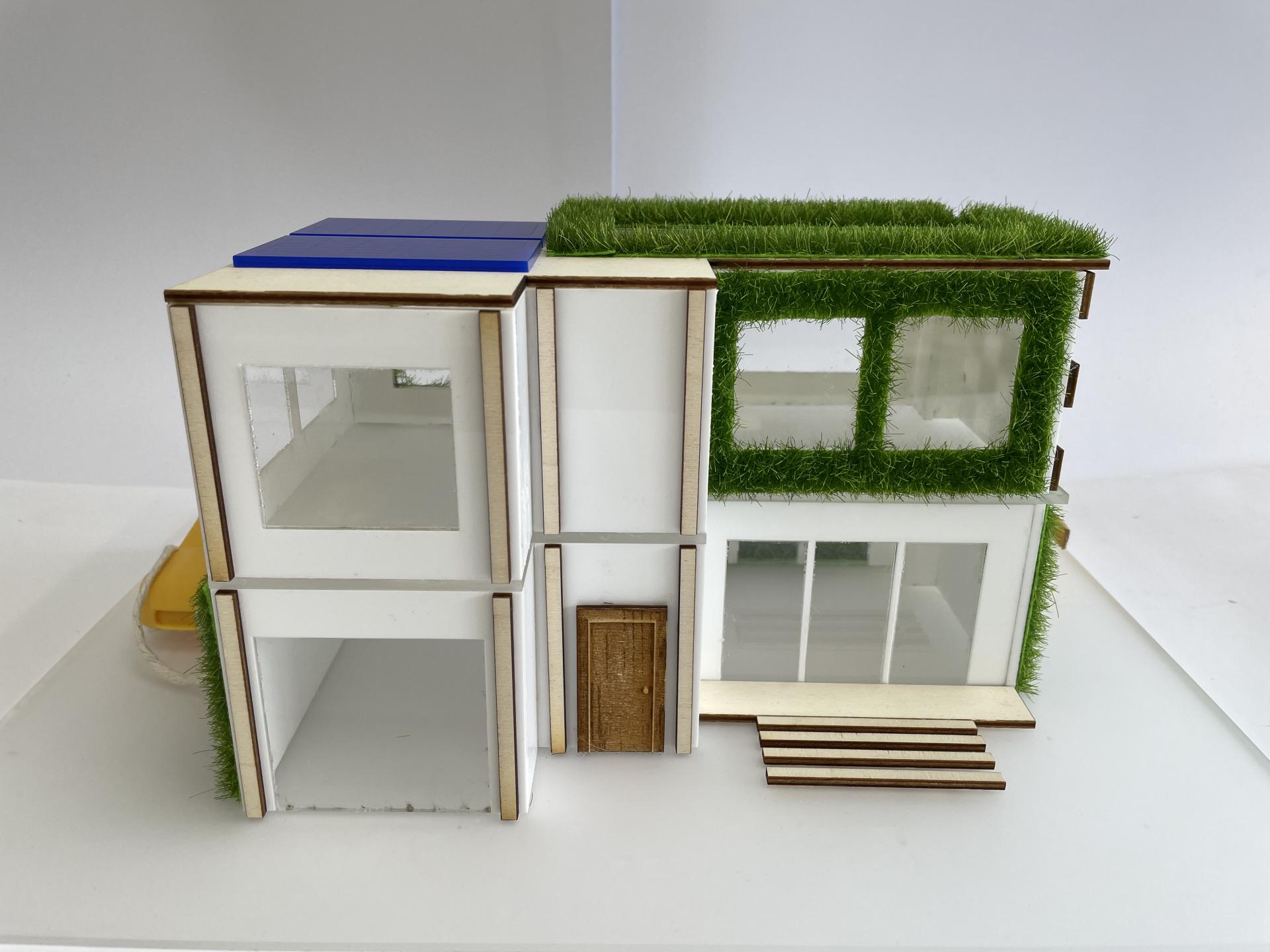
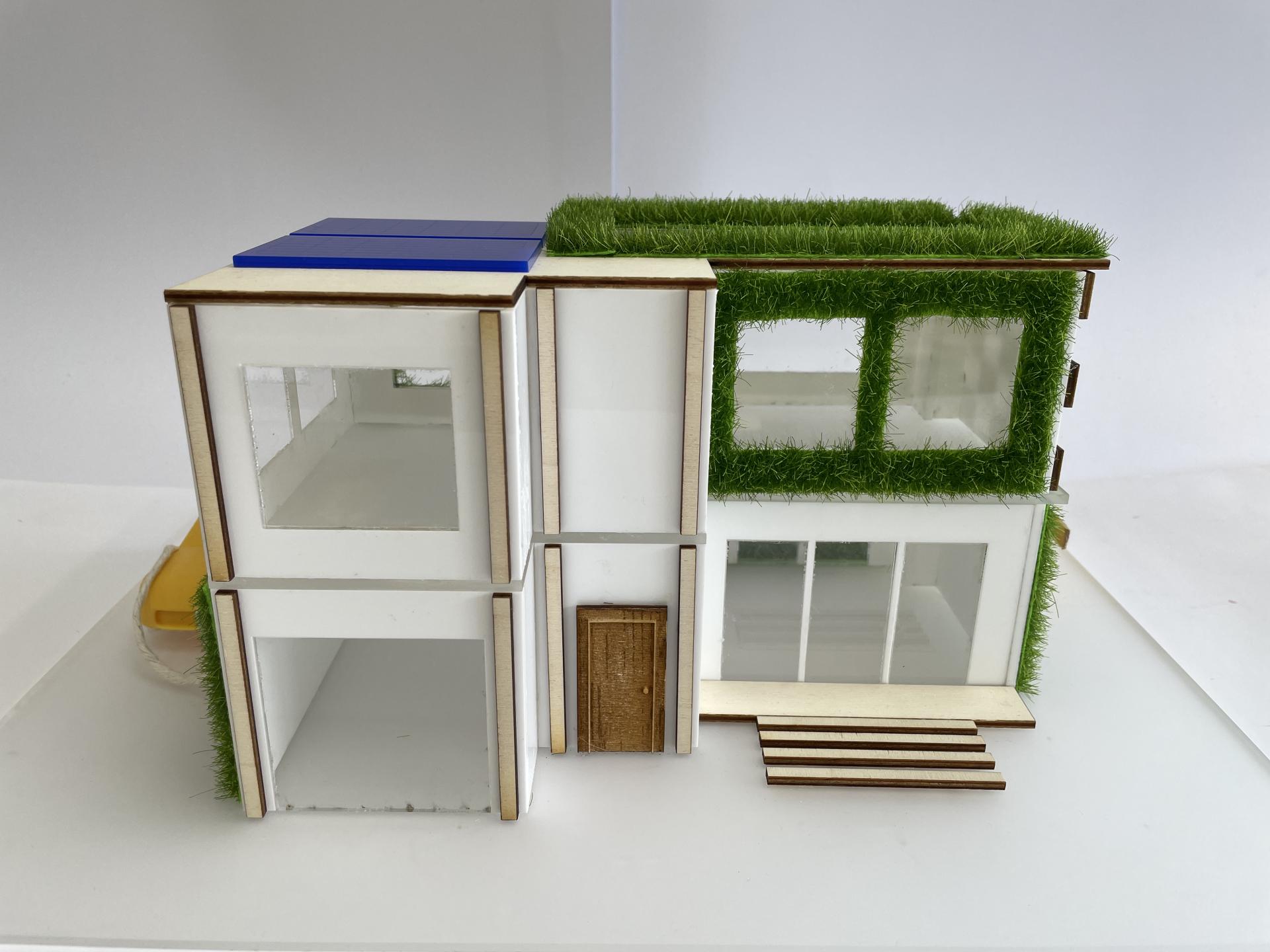
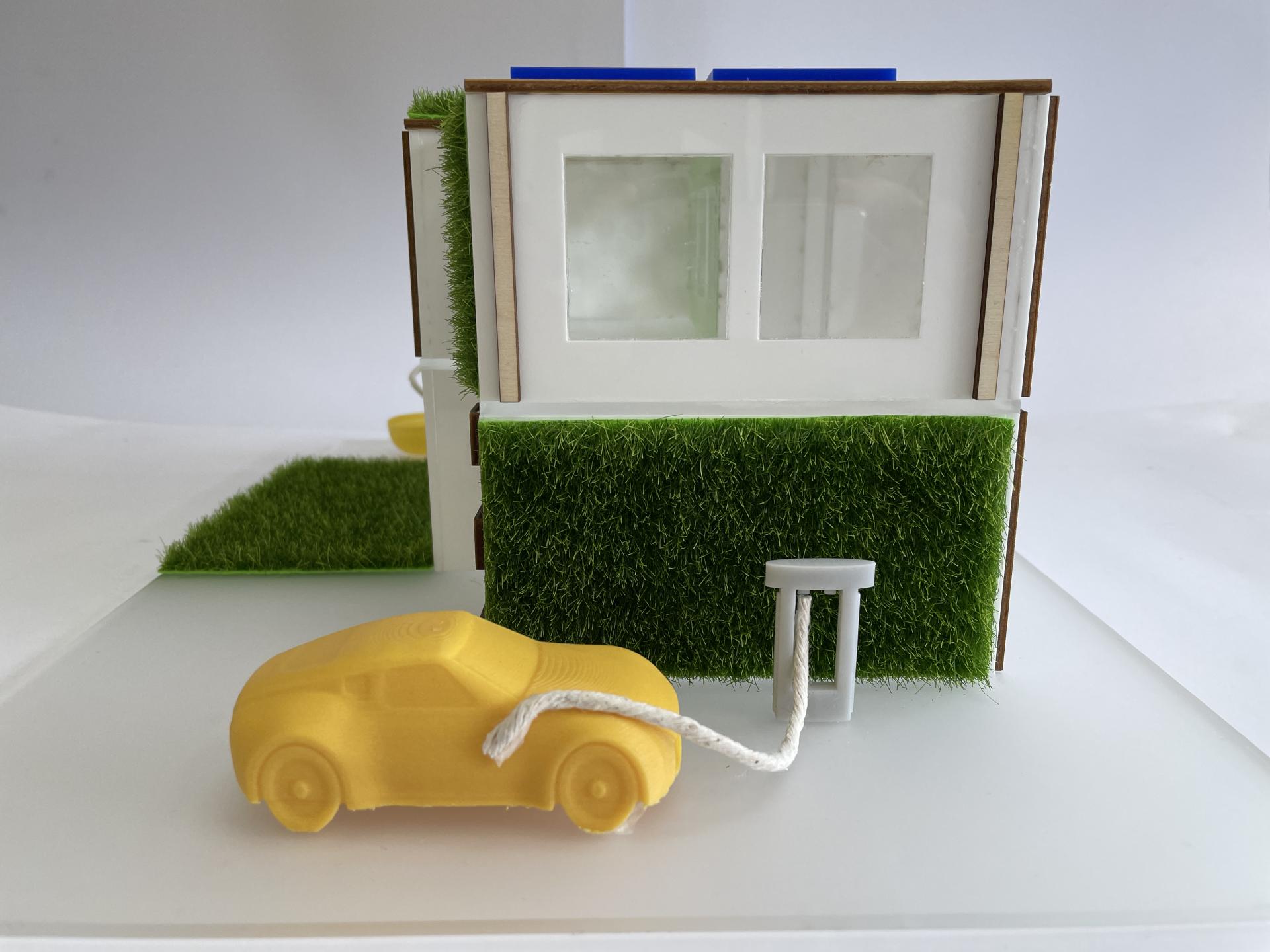
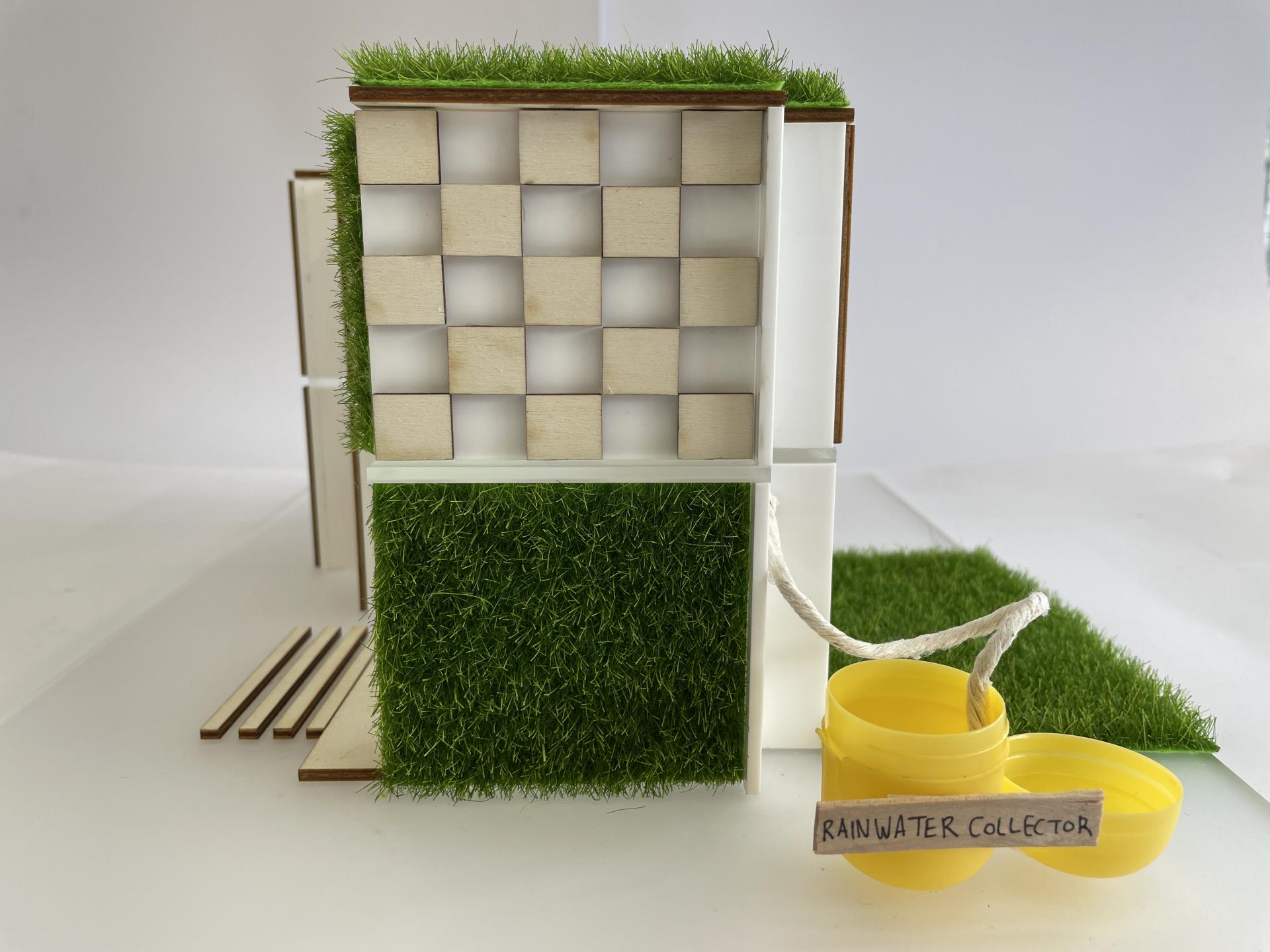
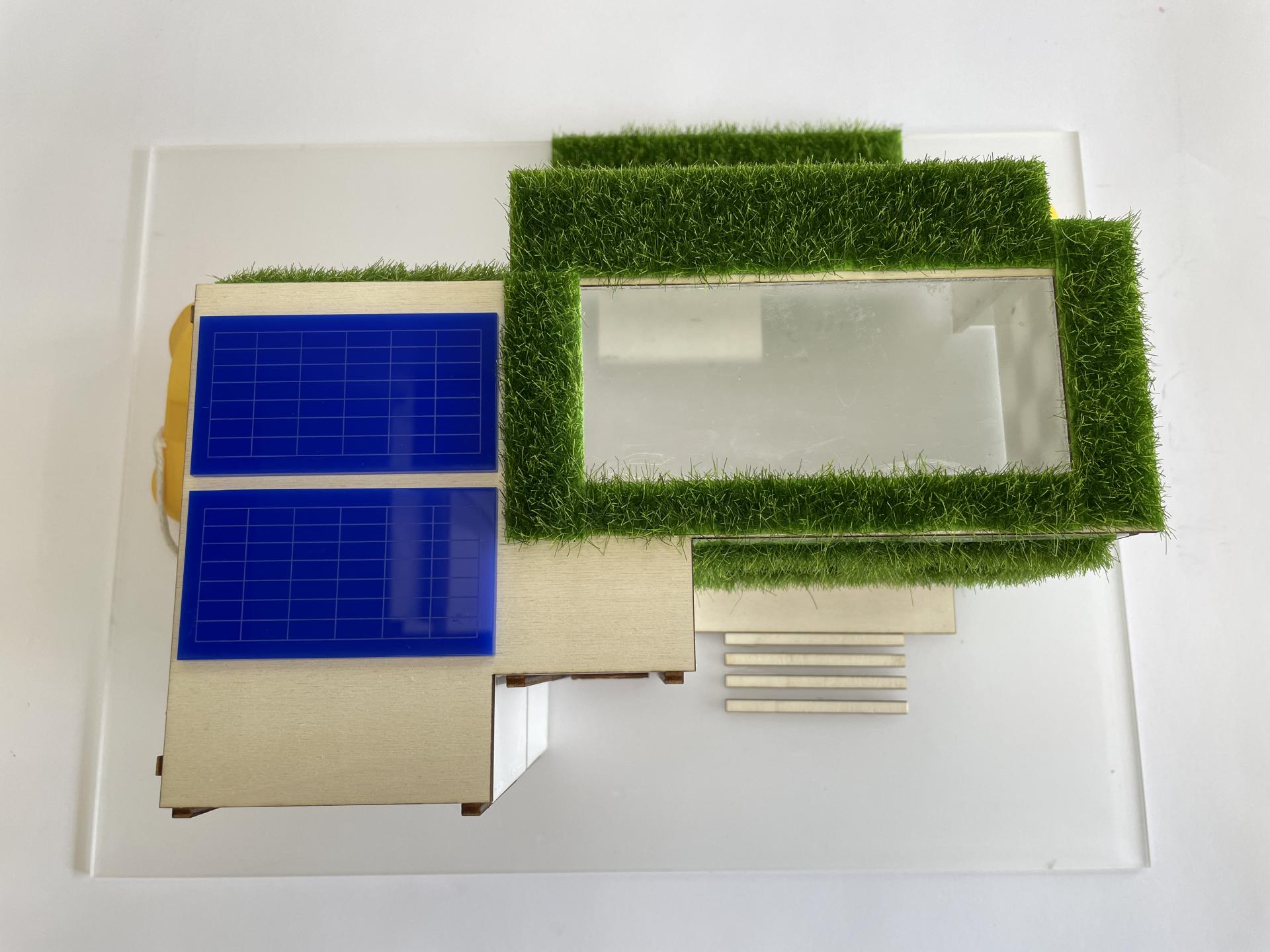
The physical outcome is a 3D model of a sustainable house; the house is made of white, frosted and wooden acrylic. These pieces were laser cut. The model house has other decorations such as a car charging point and a model car which were 3D printed. There is turf on the roof and on parts of the model house, I used artificial grass to represent the turf on the model house. The purpose of having the turf is that it insulates the house; in the winter, the turf can keep warmth, as well as keeping the house cool during the summer. Other features that make this house sustainable are solar panels, a skylight, a rainwater collector, and a car charging point. Why did I create a model house? It is because I wanted to show the potential sustainable housing would have if it was implemented more in construction projects for suburban areas.
 Foundation Diploma in Art, Design & Media Practice - Epsom
  Isobel Gale | Pre-degree & Foundation Studies